
The 2026 Plastic Deadline: Why Sustainable Packaging for Retailers is Moving from “Optional” to “Urgent”

If you’ve been sensing a bit of “policy panic” in the retail world lately, you aren’t imagining it. As we move through 2026, the countdown clocks for major environmental mandates are hitting zero. The search for sustainable packaging for retailers has shifted from a “green” trend to a mandatory survival strategy.
From the EU’s Packaging and Packaging Waste Regulation (PPWR) updates to China’s ban on non-degradable express packaging, the “plastic safety net” has officially snapped.
For many brands, this isn’t just a headline—it’s a looming financial threat. If your warehouse is still full of plastic mailers, you aren’t just holding stock; you’re holding potential fines.
Why the Shift to Sustainable Packaging for Retailers is Happening Now
The regulatory landscape has shifted from “suggestions” to “seizures.” In many regions, authorities are no longer just issuing warnings; they are actively auditing supply chains.
- The EU Impact: The PPWR now requires nearly all packaging to be recyclable or reusable.
- The Global Shift: Major markets like California have moved toward a total single-use plastic bag ban, leaving retailers scrambling for alternatives that actually hold up during transit.
Retailers who waited until the last minute are now finding themselves in a “panic-buying” cycle, driving up the costs of eco-friendly alternatives as demand spikes.
The Cost of Doing Nothing: More Than Just a Fine
When we talk about the “Policy Panic,” it isn’t just about avoiding a slap on the wrist from a local inspector. For B2B businesses, the stakes are much higher—they are about contractual survival.
As of August 2026, the EU’s Packaging and Packaging Waste Regulation (PPWR) means that non-compliant goods can actually be rejected at the border or pulled from shelves. In the Netherlands and Germany, for example, repeated violations can lead to administrative fines reaching up to €200,000.
But even more critical is your relationship with “Big Box” retailers. Giants like Walmart and IKEA have spent years building their own sustainability scorecards. If your packaging isn’t compliant with the new global standards, you risk being “de-listed.”
These retailers simply won’t risk their own reputation (or legal standing) by carrying products wrapped in non-compliant plastic. Acting now isn’t just about following the law; it’s about making sure your business stays “retail-ready” for the world’s biggest buyers.
The Benefits of Switching to Jute and Cotton
So, why are the smartest brands suddenly obsessed with natural fibers? It’s not just about looking “green”—it’s about performance.
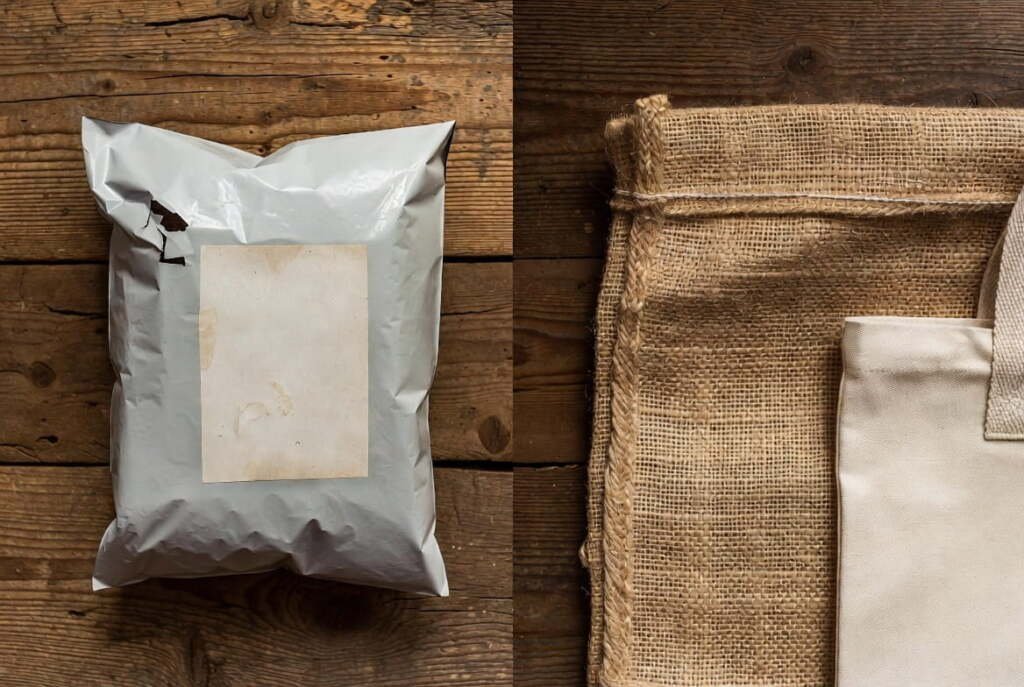
- Durability That Plastic Can’t Match: Jute (the “golden fiber”) has high tensile strength. It’s perfect for heavy retail goods that would tear a standard plastic mailer.
- The “Evergreen” Branding: Plastic is seen as trash the moment it’s opened. A high-quality cotton tote or a rugged jute bag is a gift. Customers keep them, reuse them, and essentially become walking billboards for your brand.
- Total Compliance: Unlike “biodegradable” plastics—which often still face regulatory hurdles—jute and cotton are 100% plant-based. They meet every major global restriction right out of the box.
Secure Your Sustainable Packaging Supply with Habitat Cultures
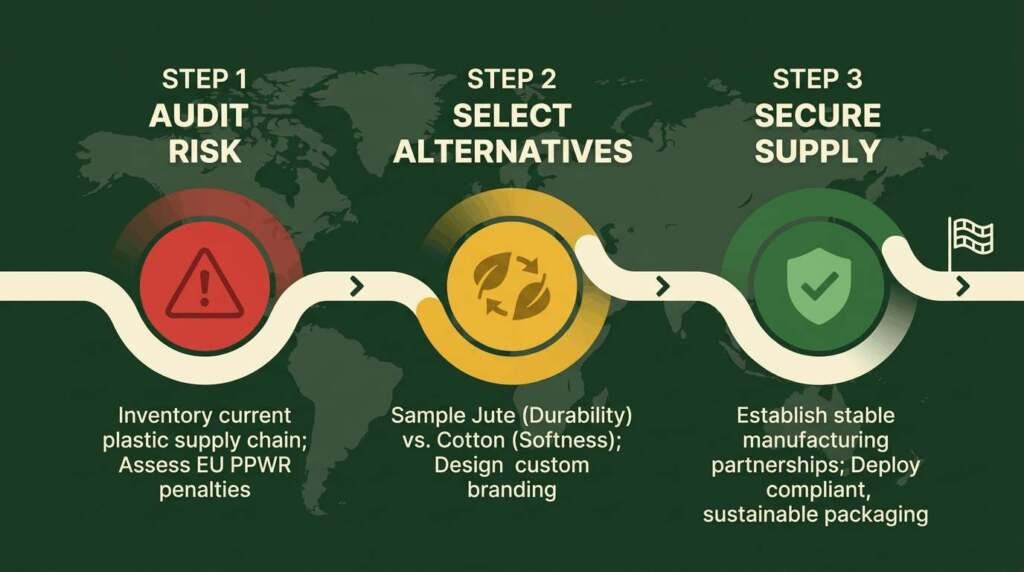
Many people look at the 2026 deadline as a burden, but at Habitat Cultures, we see it as the ultimate branding upgrade. A plastic mailer is a “single-use” experience; once it’s opened, it’s trash. A high-quality jute or cotton bag, however, is an asset that stays in your customer’s life for years.
We specialize in turning sustainable packaging for every business into premium brand statements. This isn’t just a plain brown sack. We offer advanced customization that puts your brand front and center:
- Vibrant Silk-Screen Printing: Perfect for bold, crisp logos on cotton that look high-end and professional.
- Durable Heat-Transfer Stickers: Great for complex, multi-colored designs on rugged jute, giving it a modern, tech-forward feel.
- Premium Textures: Unlike the “crinkle” of plastic, the weight and feel of natural fibers tell your customer that your product is high-quality before they even see what’s inside.
When your customer reuses that branded tote at the grocery store or the gym, your brand gets a “free” impression every single day. You aren’t just buying a bag; you’re investing in a walking billboard that pays for itself.
Beyond packaging, we’ve helped many brands fully transition their inventory with our full range of eco-friendly wholesale items, from artisan seagrass baskets to sustainable cotton nets.”
Stop Reacting. Start Leading.
The retailers who win this year won’t be the ones paying record-high prices for last-minute supplies. They will be the ones who swapped their plastic for nature’s strongest fibers before the fines started rolling in.